Skip to content
Dark red background with a white open book and pencil icon, alongside the text “4 Quality Education.” Represents the goal of inclusive, equitable, and quality education for all.
Orange background with three connected white building blocks and the text “9 Industry, Innovation and Infrastructure.” Represents the development of resilient infrastructure and sustainable industrialization.
Green background with a white eye shape containing the Earth, and the text “13 Climate Action.” Represents urgent action to combat climate change and its impacts.
Navy background with five interlinked white circles forming a flower-like shape, and the text “17 Partnerships for the Goals.” Illustrates the goal of strengthening global partnerships to support sustainable development.

KTU Brings Together European Students: “Green Chemistry” Programme Inspires a More Sustainable Future for Chemistry

Important | 2026-04-15

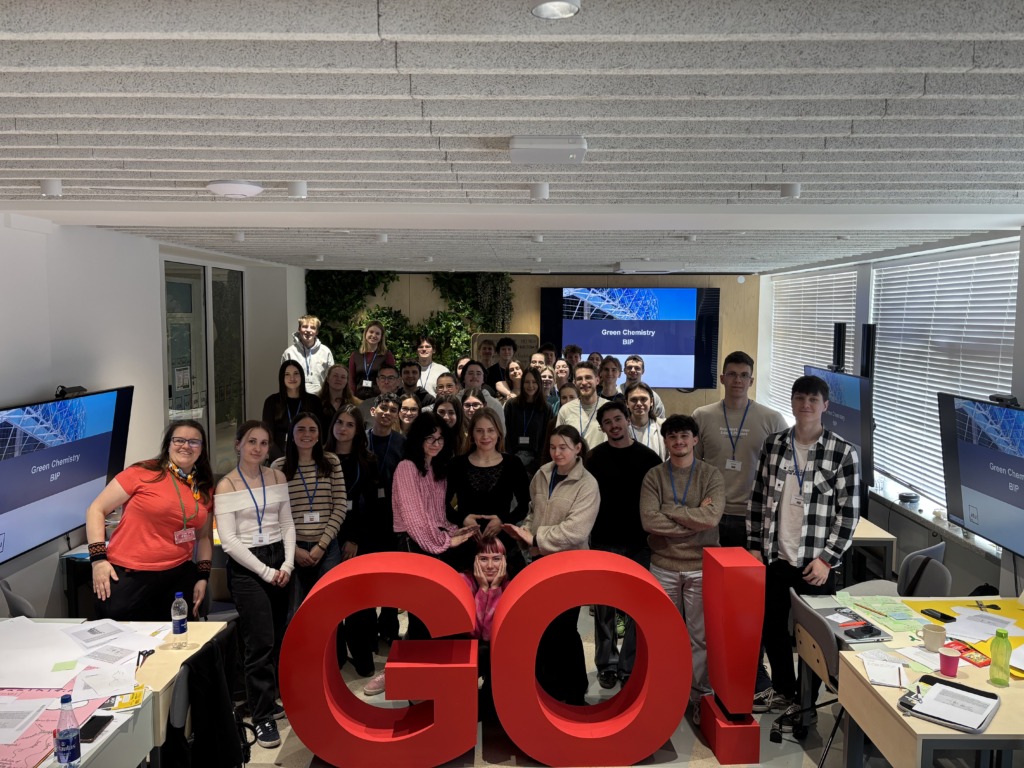
The Erasmus+ blended intensive programme held at the Faculty of Chemical Technology (CTF) of Kaunas University of Technology (KTU) combined theory, practice, and international experience, encouraging students to explore the principles of green chemistry and their application in industry.

From March 16–20, the international Erasmus+ project “Green Chemistry” (Blended Intensive Programme – BIP) took place at KTU CTF. The programme brought together a diverse group of students from across Europe: University of Montpellier and Artois University (France), UCLL University of Applied Sciences (Belgium), Riga Technical University (Latvia), Lodz University of Technology (Poland), as well as students from the host institution, KTU. In total, several dozen students participated, working in international teams.

Aim: Knowledge, Practice, and International Collaboration

The project aimed to provide students with in-depth knowledge of green chemistry principles and their practical application in the chemical industry. It also sought to develop students’ ability to work in international teams, foster intercultural collaboration, and deepen understanding of the life cycle of chemical products.
A Balanced Programme: From Culture to Industry

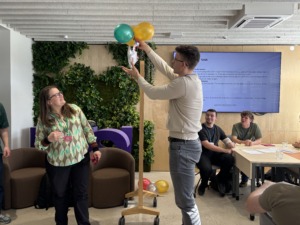
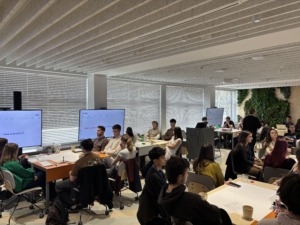
The intensive week offered a well-balanced programme, combining academic learning with cultural and social activities. Students worked in international teams of five, creating concept maps that helped them better understand green chemistry theory and apply it in practice through product life cycle analysis.

Moments from Project Activities

The programme began with a cultural evening, where Lithuanian folk dances were performed by the “Nemunas” ensemble, followed by student presentations of traditional dishes from their home countries. Participants also took part in a guided tour of Kaunas Old Town. In addition, they visited the Volfas Engelman brewery, where they learned about the production process, and the Lifosa plant, where they had the opportunity to observe industrial processes up close.

At the end of the week, students presented their work, summarized the knowledge they had gained, and concluded the programme with a farewell lunch.

Acquired Competencies and the Value of International Experience

According to participants, the project helped them strengthen their ability to critically assess the importance of green chemistry in scientific and industrial development. They also learned to explain the significance and limitations of product life cycle analysis and enhanced their skills in working within multicultural environments by integrating diverse knowledge and perspectives.

Moments from Project Activities

“International experience allows us to combine different areas of knowledge and develop sustainable solutions,” says Assoc. Prof. Dr. Vida Malinauskienė. This initiative strengthens the international visibility of KTU CTF and its collaboration with European universities. It also enables the integration of advanced teaching methods, ensuring that graduates are prepared to meet future industry standards and sustainability challenges.